
What Does It Really Cost to Own a Piano?
A piano is one of the few things we buy that can stay in a home for decades, sometimes even generations. But because most people purchase a piano only once or twice in their lifetime, it’s understandable that they may not know what to expect beyond the initial price.
The good news is that the ongoing cost of owning a piano is often quite manageable.
For most acoustic pianos in a home, tuning is the primary recurring expense. A typical tuning costs approximately $150 to $250 in many U.S. markets, and most home pianos benefit from one or two tunings each year. That puts routine annual tuning costs at roughly $150 to $500, before any additional maintenance or repairs. Your actual costs will depend on the piano, its environment, and how it’s used.
Beyond the purchase price, you may have initial expenses such as delivery, along with occasional costs for adjustments, repairs, accessories, or humidity control. What you’ll actually spend depends on the instrument and your circumstances. Digital pianos don’t require tuning, although their long-term maintenance considerations are different.
Understanding these costs can help you plan for ownership, compare different types of pianos, and appreciate the long-term value of an instrument that may serve your household for many years.
The initial cost of bringing a piano home
The purchase price is typically the largest expense associated with owning a piano, but there may be a few additional costs to consider before it arrives in your home.
For acoustic pianos, professional delivery is important. The cost depends on the type and size of the piano, the distance involved, and whether the move includes stairs or other access challenges. Some dealerships include local delivery in the purchase price, while others charge separately. Many digital pianos can be delivered and assembled more easily, depending on the model.
It’s also worth understanding what preparation and service are included. A properly prepared acoustic piano should be inspected, tuned, and adjusted before delivery. Once it’s in your home and has had time to acclimate, another tuning may be appropriate. Some dealers include that first in-home tuning, while others charge for it.
New pianos generally come with a manufacturer’s warranty, and many include a matching bench. Used pianos may have different warranty and accessory arrangements. Before purchasing, ask your dealer to explain exactly what’s included and whether there are any additional charges.
For a closer look at initial purchase prices, see our How Much Does a New Piano Cost in 2026? guide. You can also learn more about the work a piano receives before delivery in What Is Piano Preparation, and Why Does It Matter?
Annual piano tuning costs
For most acoustic piano owners, tuning is the main recurring expense. All acoustic pianos need periodic tuning because their strings and wooden components respond to changes in temperature and humidity.
A standard piano tuning typically costs $150 to $250 in many U.S. markets. Most home pianos benefit from one or two tunings a year, putting the typical annual tuning expense at approximately $150 to $500.
When customers ask how often they should tune their piano, we explain that there’s no single schedule that works for everyone. Here’s what makes a difference:
- How the piano is used. Pianos used for teaching, rehearsals, or performances may need more frequent tuning, particularly when players expect consistent concert-level pitch.
- Your home’s environment. Seasonal changes in temperature and humidity can affect tuning stability.
- The age and condition of the piano. New instruments may need additional tuning as they settle, while older pianos that haven’t been maintained regularly may require extra work.
- Your expectations as a player. Some pianists are more sensitive to small changes in pitch and prefer to have their instruments tuned more frequently.
If a piano hasn’t been tuned for several years, it may also need a pitch correction or additional tuning visits to bring it back to the proper pitch. A qualified piano technician can evaluate its condition and explain what work is needed.
If your piano is due for service, our Reno piano tuning team can help you schedule a visit and answer questions about its care.
Other piano maintenance and occasional repairs
Beyond tuning, an acoustic piano may occasionally need adjustments or repairs to keep it playing and sounding its best. These aren’t necessarily annual expenses, and some owners may go years without needing much additional work.
Here are the most common services:
- Regulation: Adjusting the moving parts of the piano’s action to keep the keys feeling even and responsive. Minor adjustments may cost a few hundred dollars, while extensive regulation can cost $1,000 or more. How often it’s needed depends on the piano’s age, quality, condition, and use.
- Voicing: Adjusting the felt hammers to change the piano’s tone, making it brighter, warmer, or more mellow. Voicing is generally done when the piano’s sound needs attention or the player wants a different tonal character, rather than on a fixed schedule.
- Minor repairs: A sticking key, squeaky pedal, or similar issue may be relatively simple for a technician to correct, sometimes during a regular tuning visit. More involved repairs will cost more.
Regular visits from a qualified piano technician offer another benefit: small problems can often be spotted and addressed before they become more expensive.
Major repairs, rebuilding, or restoration are a different matter. They may become appropriate later in an acoustic piano’s life, but they aren’t part of normal annual maintenance and won’t make financial sense for every instrument.
How your home’s environment affects piano care
One of the easiest ways to protect an acoustic piano doesn’t cost anything: choosing a good spot for it in your home.
Pianos contain wood, felt, and other materials that respond to changes in temperature and humidity. A reasonably stable environment helps your piano hold its tuning, keeps the action working consistently, and protects its finish and internal components.
A few simple precautions can make a difference:
- Avoid heating and cooling vents. Direct blasts of hot or cold air can cause unnecessary temperature changes around the piano.
- Keep it away from fireplaces and exterior doors. These areas may expose the piano to sudden changes in temperature and humidity.
- Limit direct sunlight. Prolonged exposure can affect the piano’s finish and create uneven heating.
- Watch humidity levels. An inexpensive digital hygrometer can help you see how much the humidity changes throughout the year.
Most pianos don’t need specialized climate-control equipment if the home maintains reasonably consistent conditions. In homes with significant seasonal changes, a room humidifier, dehumidifier, or piano climate-control system may be worth considering.
Your piano technician can help you decide whether additional humidity control would be beneficial for your instrument and your home’s environment.
Optional piano accessories and equipment
You probably won’t need to buy many accessories for your piano. Most new pianos come with a matching bench, and some used pianos include one as well. Beyond that, additional purchases depend on your instrument, your home, and how you plan to use it.
A few accessories worth considering include:
- Adjustable piano bench: Provides more flexibility in seating height, especially when several family members share the piano.
- Piano lamp: Helps illuminate the music and keyboard in rooms with limited lighting.
- Caster cups or floor protectors: Help protect flooring beneath an acoustic piano’s wheels.
- Piano cover: Offers additional protection from dust and sunlight, particularly in busy rooms or shared spaces.
- Headphones: Useful for digital, hybrid, SILENT, and TransAcoustic pianos that support private listening.
- Pedal extenders or footrests: Help younger players maintain a comfortable playing position while reaching the pedals.
Digital and hybrid piano owners may also want appropriate surge protection for their electronic instruments.
Some accessories cost less than $50, while specialty benches and custom piano covers can cost several hundred dollars or more. Fortunately, most are optional, and there’s no need to purchase everything when you buy your piano. Your piano dealer can help you decide what’s worth purchasing now and what you can comfortably do without.
Acoustic, digital, and hybrid pianos have different ownership costs
Not all pianos have the same maintenance needs. Acoustic pianos require regular tuning and occasional mechanical adjustments, while digital pianos generally need very little routine maintenance.
Digital hybrids, such as Yamaha AvantGrand, use a piano-style mechanical action with digitally produced sound. They don’t need tuning, but they may need occasional adjustments to the action or service for their electronic components.
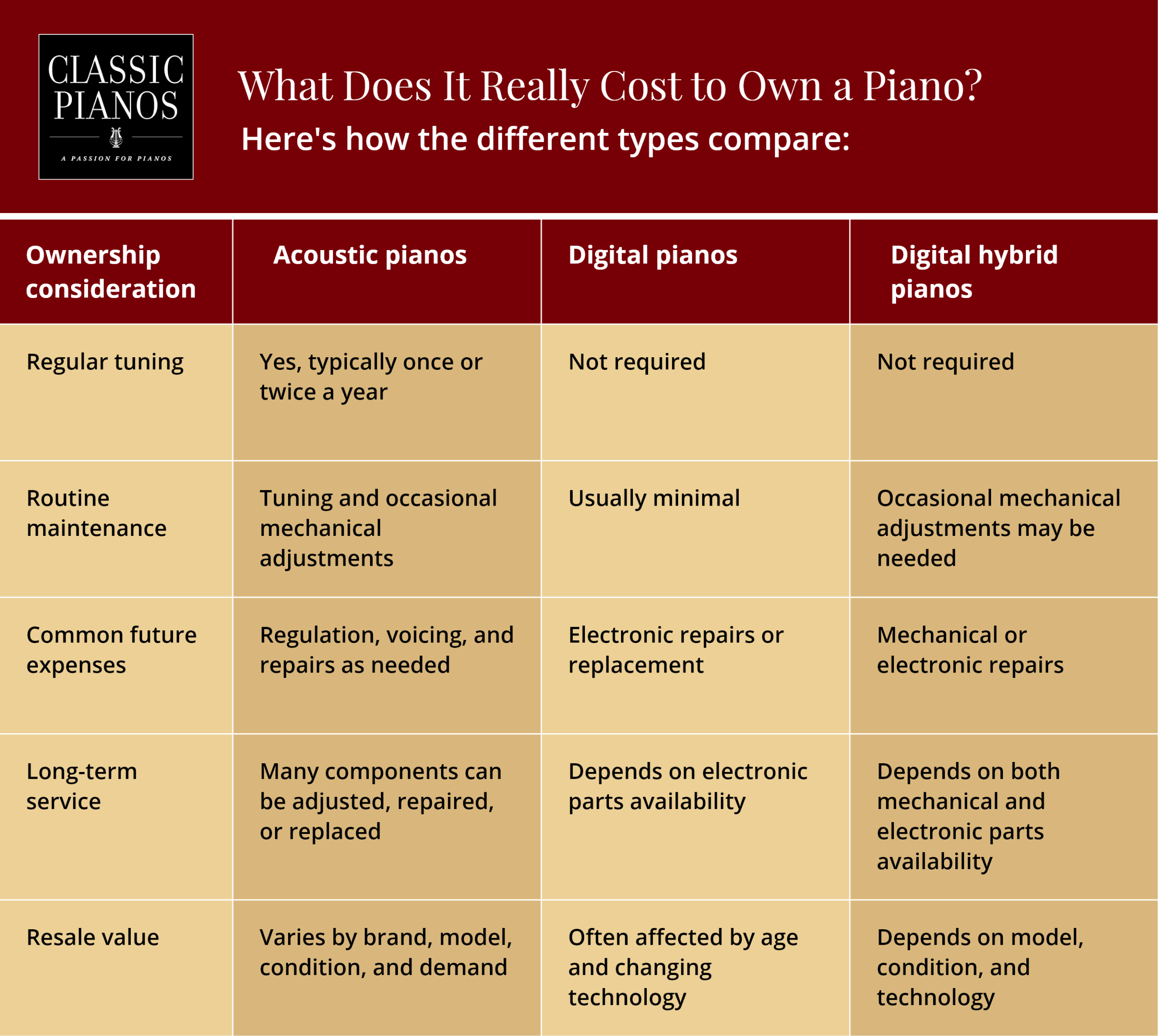
| Ownership consideration | Acoustic pianos | Digital pianos | Digital hybrid pianos |
|---|---|---|---|
| Regular tuning | Yes, typically once or twice a year | Not required | Not required |
| Routine maintenance | Tuning and occasional mechanical adjustments | Usually minimal | Occasional mechanical adjustments may be needed |
| Common future expenses | Regulation, voicing, and repairs as needed | Electronic repairs or replacement | Mechanical or electronic repairs |
| Long-term service | Many components can be adjusted, repaired, or replaced | Depends on electronic parts availability | Depends on both mechanical and electronic parts availability |
| Resale value | Varies by brand, model, condition, and demand | Often affected by age and changing technology | Depends on model, condition, and technology |
What about SILENT and TransAcoustic pianos?
Yamaha SILENT and TransAcoustic pianos are acoustic instruments with added electronic technology. They still have strings and soundboards, so they need regular tuning and normal acoustic piano maintenance. Their electronic components may also require service over time.
No single type of piano is automatically the least expensive to own. The best value depends on how the instrument will be used, its expected lifespan, and the care it may need along the way.
How piano quality and condition affect ownership costs
One thing we encourage customers to consider, especially when shopping for a used piano, is what the instrument might need after they bring it home.
A piano offered at a very low price can seem like a bargain. But if it needs extensive repairs, the total cost may be much higher than expected. A well-maintained used piano that’s been properly inspected and prepared, however, may give you years of dependable playing without much additional expense.
Age matters, but a piano’s condition and maintenance history often tell you much more about what ownership will involve.
A few things can affect future expenses:
- Original quality: A well-built piano may hold up better over years of regular use and be more practical to maintain or repair.
- Maintenance history: Regular tuning and service can help keep a piano in good playing condition and make potential problems easier to identify.
- Previous environment: Exposure to significant humidity changes or poor storage conditions can affect an acoustic piano’s components.
- Current condition: Worn action parts, tuning instability, or other mechanical issues may require attention soon after purchase.
If you’re buying from a private seller, having a qualified piano technician inspect the instrument before purchasing can help you avoid unexpected expenses.
When you’re comparing pianos, we encourage you to look beyond the price on the tag. Ask what’s included in the purchase, particularly delivery, preparation, the first in-home tuning, and warranty coverage. Two pianos with similar prices may come with very different levels of service and support.
For more guidance, see our New vs. Used Acoustic Pianos: Which Should You Buy? article.
The long-term value of owning a piano
One of the advantages of a quality acoustic piano is how long it can last. With proper care, a well-built piano may serve a family for decades, sometimes passing from one generation to the next.
That makes its cost worth considering over the years you’ll actually use it, rather than just at the time of purchase. For example, a $10,000 piano kept for 25 years represents an initial purchase cost of $400 per year, before tuning, maintenance, and other expenses. And during that time, it might support a child’s first lessons, an adult returning to music, or several family members at different stages of playing.
Digital and hybrid pianos can also provide many years of enjoyment, although their useful lives may be influenced by changing technology and the availability of replacement parts.
What about resale and trade-in value?
A quality piano may also retain some value when it’s time to sell or trade it. However, there’s no guaranteed resale amount, and some instruments hold their value better than others.
Factors that can affect a piano’s future value include:
- Brand and model: Established brands and popular models may have stronger demand in the used piano market.
- Condition and maintenance: A piano that’s been well cared for, with service records to support it, may be more attractive to future buyers.
- Age and technology: Age alone doesn’t determine an acoustic piano’s value, but older digital instruments may be affected by changing technology and parts availability.
- Market demand: Local demand and the availability of similar instruments can influence what buyers are willing to pay.
Classic Pianos’ Five-Star Trade-Up policy offers another option when you’re ready for a different piano. Depending on the instrument and the program terms, you may be able to receive credit toward your next purchase without having to sell your current piano privately.
Resale or trade-in value is best viewed as a possible benefit, not a guaranteed return. But for many owners, a piano’s real value is how often someone sits down to play it, and the role it comes to have in their home.
When it’s time to sell or trade in your instrument, our guide to used piano values explains what affects its current market value.
Good piano guidance doesn’t end at delivery
We know that questions about a piano don’t stop once it’s delivered. Customers may wonder whether a change in sound means it’s time for tuning, how to care for their piano during seasonal weather changes, or what their options are when someone in the family is ready for a different instrument.
That’s why having knowledgeable people to turn to can be so valuable over the years.
At Classic Pianos, that support may include:
- Planning for maintenance: Helping you understand your piano’s service needs and connecting you with qualified technicians.
- Getting answers when you need them: Offering guidance about piano care, warranty questions, or changes in how your instrument sounds or plays.
- Planning your next piano purchase: Helping you explore trade-in or trade-up opportunities if your needs change.
We’re happy to be a resource long after your piano has been delivered, helping you care for your instrument and enjoy it for years to come.
Visit Classic Pianos in Reno to find your next piano
The best way to find a piano that fits your playing goals and budget is to experience different instruments in person.
Visit Classic Pianos in Reno to explore our selection of new pianos and used pianos, compare acoustic, digital, and hybrid models, and talk with our team about what to expect from piano ownership. We’re happy to answer questions about maintenance, delivery, warranty coverage, financing, and trade-up opportunities.
Stop by our showroom at 111 W. Plumb Lane in Reno, or call 775-902-2088. We’ll help you find a piano you’ll enjoy playing for years to come.
Frequently asked questions about piano ownership costs
How much does it cost each year to own an acoustic piano?
For most acoustic pianos in a home, annual tuning is the primary recurring expense. At approximately $150 to $250 per tuning, one or two tunings a year typically cost $150 to $500. Occasional regulation, repairs, or humidity-control equipment may add to the total, depending on the piano’s condition and environment.
How much does it cost to maintain a piano over 10 years?
Based on one or two tunings a year at $150 to $250 per visit, routine tuning could cost approximately $1,500 to $5,000 over 10 years at those rates. This doesn’t include future price increases, occasional repairs, regulation, or other services that might be needed. A well-maintained piano in a stable home environment may have relatively few additional expenses.
How much does piano regulation cost?
Minor action adjustments may cost a few hundred dollars, while extensive regulation can cost $1,000 or more. Complete regulation of some grand pianos may cost considerably more. The amount depends on the instrument and the work required, so a qualified piano technician should evaluate it before providing an estimate.
Do digital pianos cost less to maintain?
Generally, yes. Digital pianos don’t require tuning and typically need very little routine maintenance. However, electronic repairs or eventual replacement may become considerations as the instrument ages, especially if replacement parts become difficult to find.
Does every acoustic piano need climate control?
No. Many acoustic pianos do well in homes with reasonably stable temperatures and humidity. A dedicated climate-control system may be helpful in environments with significant seasonal changes, but it isn’t necessary for every instrument. Your piano technician can help determine what’s appropriate.
Do pianos hold their value?
Some pianos retain value better than others. Brand, model, condition, maintenance history, age, and market demand all affect resale and trade-in value. Quality acoustic pianos may retain value over many years, but there’s no guaranteed resale amount. Digital pianos are often more affected by age and changing technology.